
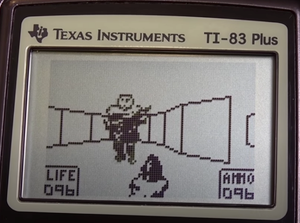
There's a long running joke about the 1993 video game, Doom, and its ability to run on any electronic device. The game itself is only somewhere around 25mbs. Basically, if you turned your phone's photo quality to maximum and snapped a pic, that would probably be as much or more than the size of the original Doom!
Epic, no? Hence, the running joke – "It runs Doom."
Famous things running Doom?
An ATM machine, a TI-83 calculator, the Macbook Pro's touch bar, a Porsche 911, fridges and toasters with digital screens...It might be easier to tell you what doesn't run Doom – electric toothbrushes, LED heelys, vapes, or pacemakers – at least, not yet.
Trendsetting
Over the last 10 years, many board games have been developed into digital games - Settlers of Catan, Carcassonne, and Codenames (one of my favs) come to mind. But more recently still, there's another emerging trend – digital games becoming board games instead.
Some of the most popular digital to board game transformations:
- The Last of Us
- Baba is You
- Dark Souls
- Portal
- Stardew Valley
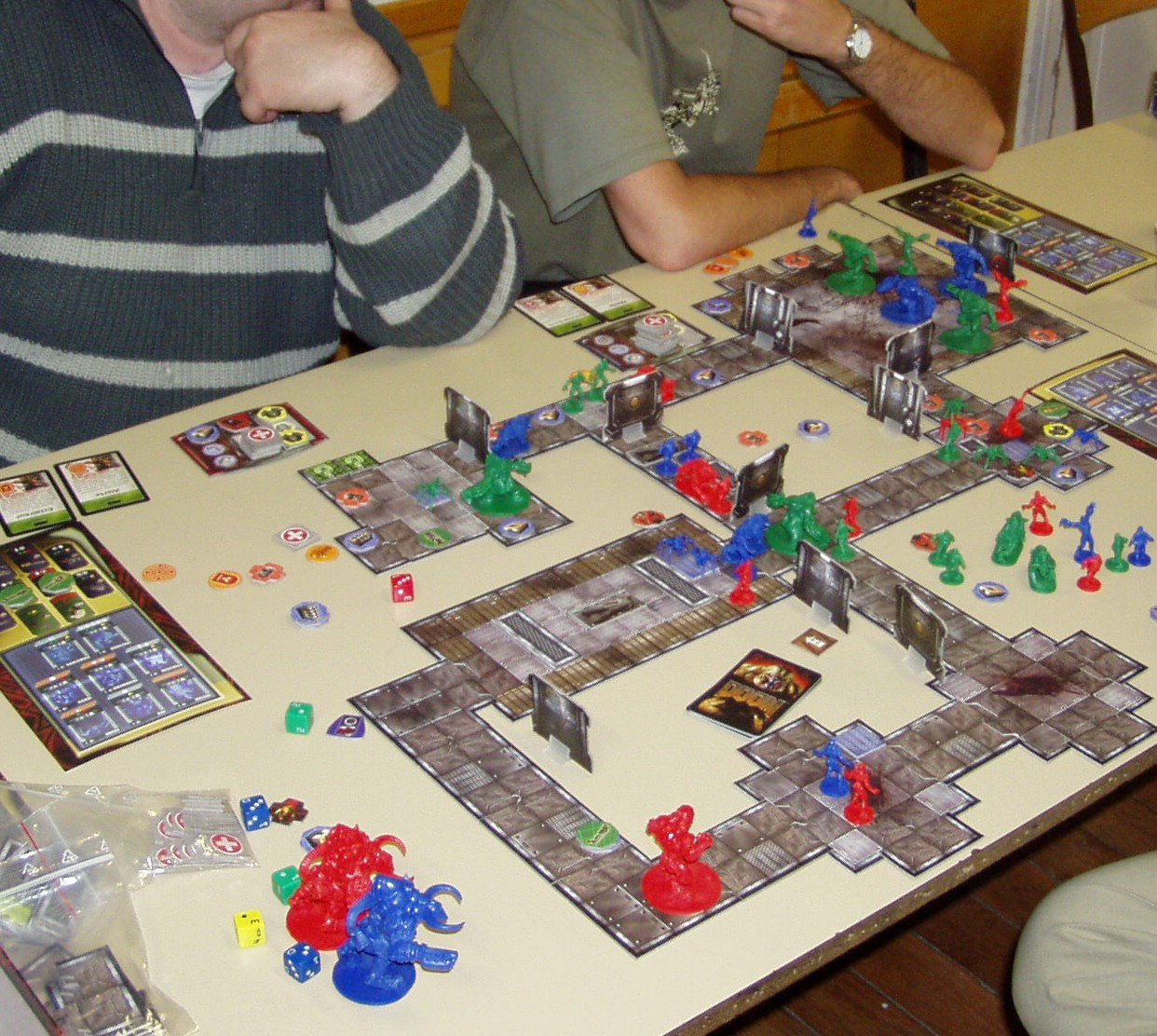
- And, ironically, Doom – Yes, it even runs as paper.
Back to Basics
Many digital games themselves have traditional beginnings as paper prototypes. Developers and designers create components out of paper and test mechanics, sometimes even the game loops themselves, to work out kinks, tweak rules, or measure the fun factor before investing tons of time and money in the development cycle (which is exactly why paper prototyping is employed by designers in tech as well).
Board game to digital makes so much sense because it's already a clearly successful game concept, right? Digital to board game also makes sense because it was likely already part of the development cycle. If it wasn't, the design challenge becomes how to translate the core mechanics from digital to analog play.
In the 2008 game Spore, players can influence the evolution of a species from microorganism through to a social society, all the way to space exploration – A massive scale of a game!
Enjoy this blast from the past!
Paper prototyping was an important part of this complex game's development. Players get to create their own species in Spore, so the designers needed to figure out all the different custom pieces available to the players, how each piece comes together to form a species, and then see how each performs against other species. Stone Librande, lead game designer, set out to answer these questions by creating a board game for paper prototyping.
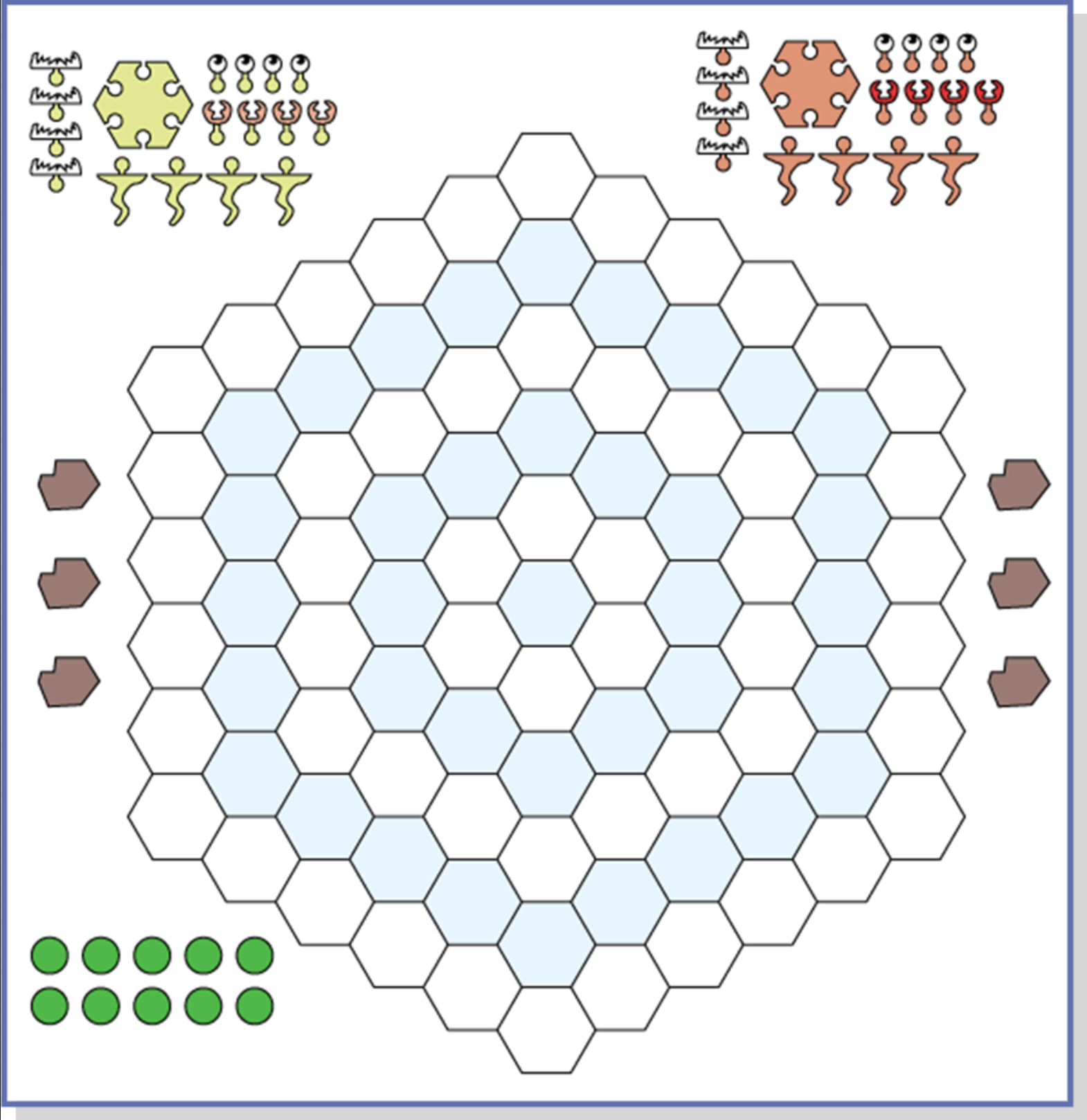
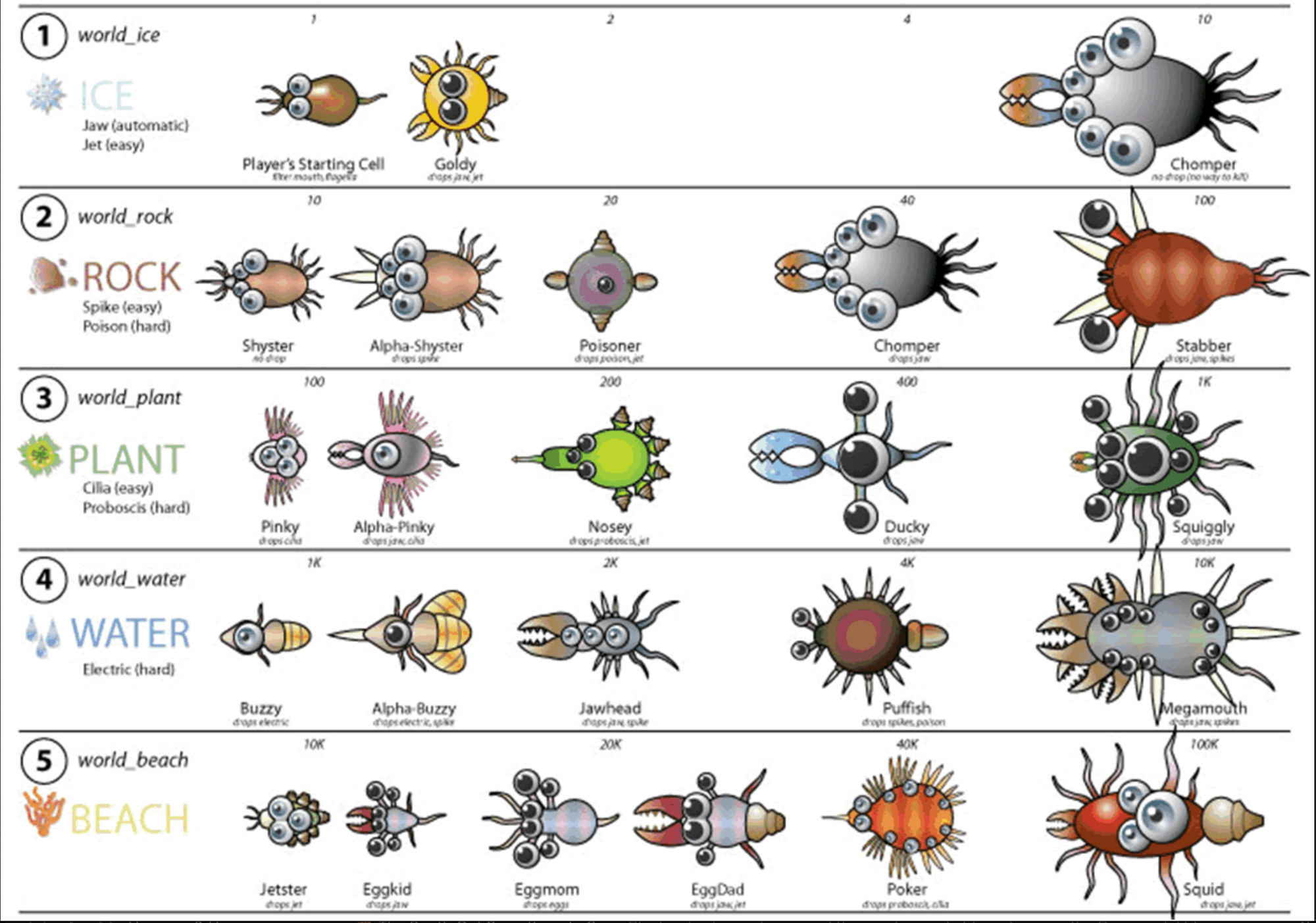
On the right, a hexagonal game board and on the left, the end game species types that came from testing these features as a board game. Images from Interview with Stone Librande
Librande ran paper prototyping workshops at the Game Developers Conference for years. In an interview with World Wide Intertubes, a UI interface design blog from the early aughts, he explained why paper works so well:
Building prototypes with paper fosters team interaction. As people work on it, they’ll start role-playing and getting into the characters of the game. They also develop a shared vocabulary for discussing elements of the game. If you did it with computers, everyone would just be working on their own and you wouldn’t get that kind of interaction.
That last line really tugs at me these days, especially now when so much of our work happens separately, with AI acting as the main go-to instead of a teammate. But play can bring a team together.
When we play together, we can become present with each other. We can connect, laugh, build on each other’s ideas, and figure things out together in a way that a training, course, or AI can't come close to matching.
Paper prototyping sounds like something only designers get to do, but that doesn't have to be the case. I think it’s one of the most underrated ways to get a team playing, thinking, and learning together and you can do it, too.
Creating a game for paper prototyping
You don't have to start at zero when it comes to making playful experiences for work. When a purpose comes up, like brainstorming, retroing, or onboarding someone new, you can look back through your experiences to build something fun that works for you and the team.
Make a mechanics bank
This part is more about setting yourself up.
Think about the games you love, digital or otherwise, and consider what makes them fun. What makes them work? Examine games you're playing right now, on your own or with friends and fam. Find what it is you like about them. Write each one on a sticky or in a notebook somewhere. Reference where you originally got the idea. These items are now your "mechanics bank."
Now, you can look into your mechanics bank and pull out the things that work best for the problem at hand and also inspire you.
Understand the problem at hand
You can always play or make a game for fun – to celebrate a team win, relax, destress, just have fun. But if you have a purpose in mind, something that needs to get done or a skill that needs to be practiced, that's a perfect time to explore making a paper prototype.
Examples include:
- Getting stakeholder alignment
- Setting ground rules for cross-functional collaboration
- Retros - Pick mechanics to match the focus. Ex. find what went awry, reflect with no blame, or discover what could've been better
- Stand-ups where the goal is matching blockers to unblockers
- Brainstorming ideas
- Practicing public speaking
- Introducing a new member of the team
- Learning about each other's styles of working and work preferences
All of these are examples of a purpose that you can build a game or activity around.
Translate a game you know into paper
Take a game you think would benefit your team and translate it into a more traditional format. Don't take paper too literally – it can be paper or a spreadsheet, or use LEGOs or voice only. You can build a board game, card game, role-playing game, party game – possibilities are endless.
Pull from your mechanics bank and remix into a totally new thing. Make sure the mechanics actually move your purpose forward. If you love a game because it clearly states what to do next but your purpose is practicing critical thinking...that might not be the best match.
And then test the thing! Play a round with your team and see what happens. What's working, what's not? Is it fun? Could the rules be clearer? Make some updates and now you've got your next iteration.
Keep in mind - making a game prototype should be fun! And it doesn't have to be a solo activity. Pull your team in to create something together.
Get in my inbox if you get stuck, have some questions, or just need someone to bounce ideas around with.
Want some more DIY guidance around building a game? Check out the Designing Play at Work checklist.