

Just last month, the White House released a series of games called The Arcade that reflect Trump's agenda: Infant savings accounts, border control, deportation, Make American Healthy Again, and...bills?
The Arcade games fall under the persuasive propaganda umbrella within the Serious Games genre. What makes a game "serious?" Basically, serious games have a purpose beyond just entertainment. These types of games can be an incredible tool when the mechanics marry the goals efficiently – to teach, persuade, train, assess, measure, treat, or even discover, as in the case of Foldit, a game that created advances in complex protein folding by crowdsourcing solutions, just by playing! An incredible example of people coming together for citizen science.
Truly, serious games can be a powerful method for change, and they have a long history in the White House, starting in 2002 with America's Army, a military recruitment game, branching out into training, simulation, and assessment games. In every case, these games were built alongside designers and developers that understood what makes serious games effective – mechanics that match the message, ease of access, and FUN.
So what happens when serious games are made without serious thought? Let's take a look, breaking down 3 of the 5 arcade games with the most serious messaging.
Build the Wall: Zombie Border Siege
This game is a clone of Tetris, the classic block-stacker. Due to complaints from The Tetris Company over copyright infringement, it has since been removed from The Arcade, leaving behind a "coming soon" plaque. I wasn't able to closely examine this one, but here's what I've put together.
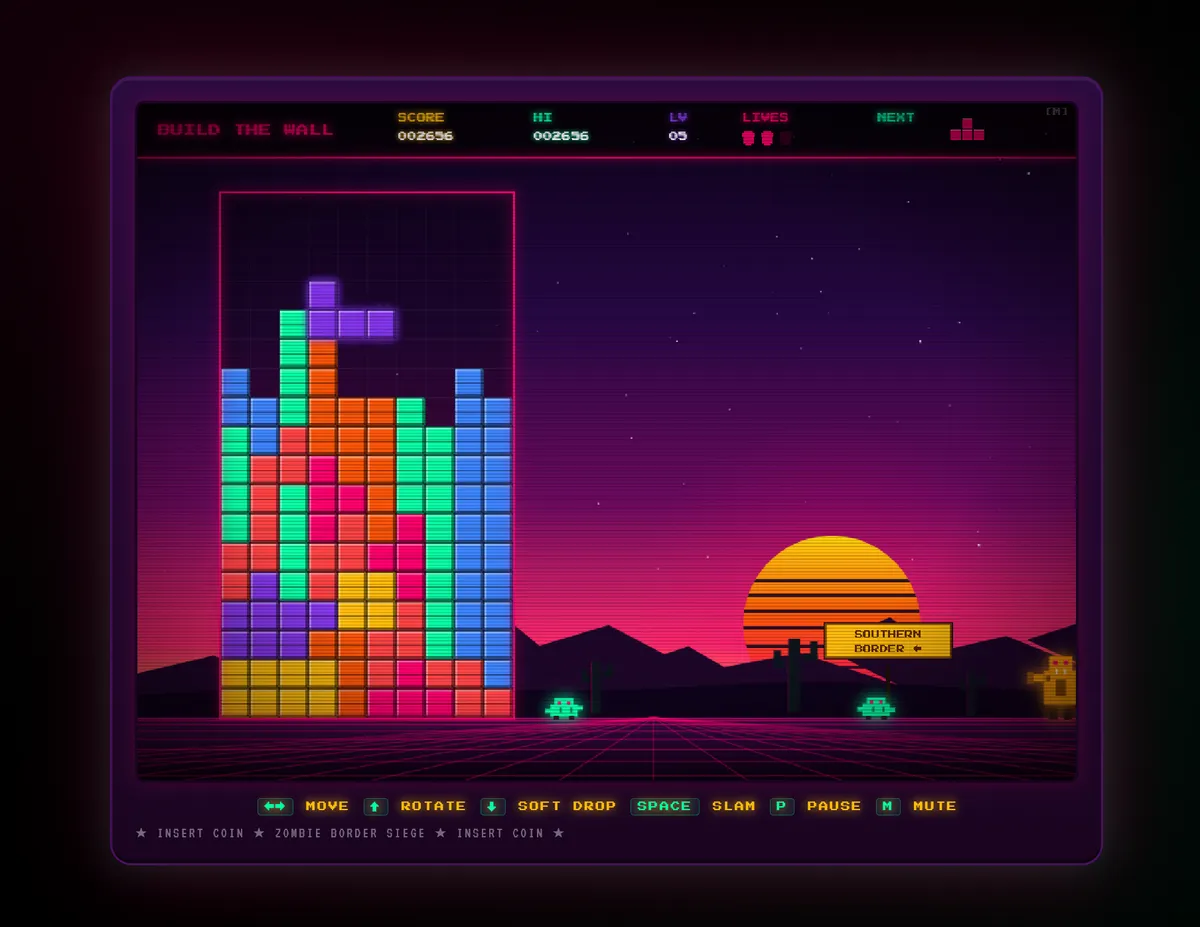
The backdrop features popular neon aesthetics from iconic 80s films and a sun setting behind mountains. It's clearly the Southern Border, as depicted by a sign. From the right, robot-esque zombies slowly move towards the Tetris area on the left. Players must have at least two blocks stacked to prevent these robots from moving all the way across the screen. That said, the blocks don't clear when a line is created, as they do in Tetris, and a Game Over screen appears when the blocks reach the top.
Tetris is a puzzle game with clear benefits – it's been used in clinical and therapeutic settings to help reduce trauma related intrusive memories and train spatial skills. Tetris has its beginnings in research, created by Alexey Pajitnov in his spare time while working at a research institute for computer science and applied mathematics.
Comparatively, the White House clone removes the best and most fun parts of Tetris to deliver an unclear message around border control - why zombies that look like robots? In fact, building the wall in this game leads to a Game Over which I'd argue is the exact opposite of this administration's intent.
Supply Line
In this game, players are tasked with removing "bad" foods from a conveyor belt leading to school lunches. Good foods are "bare," bad foods are "treated."
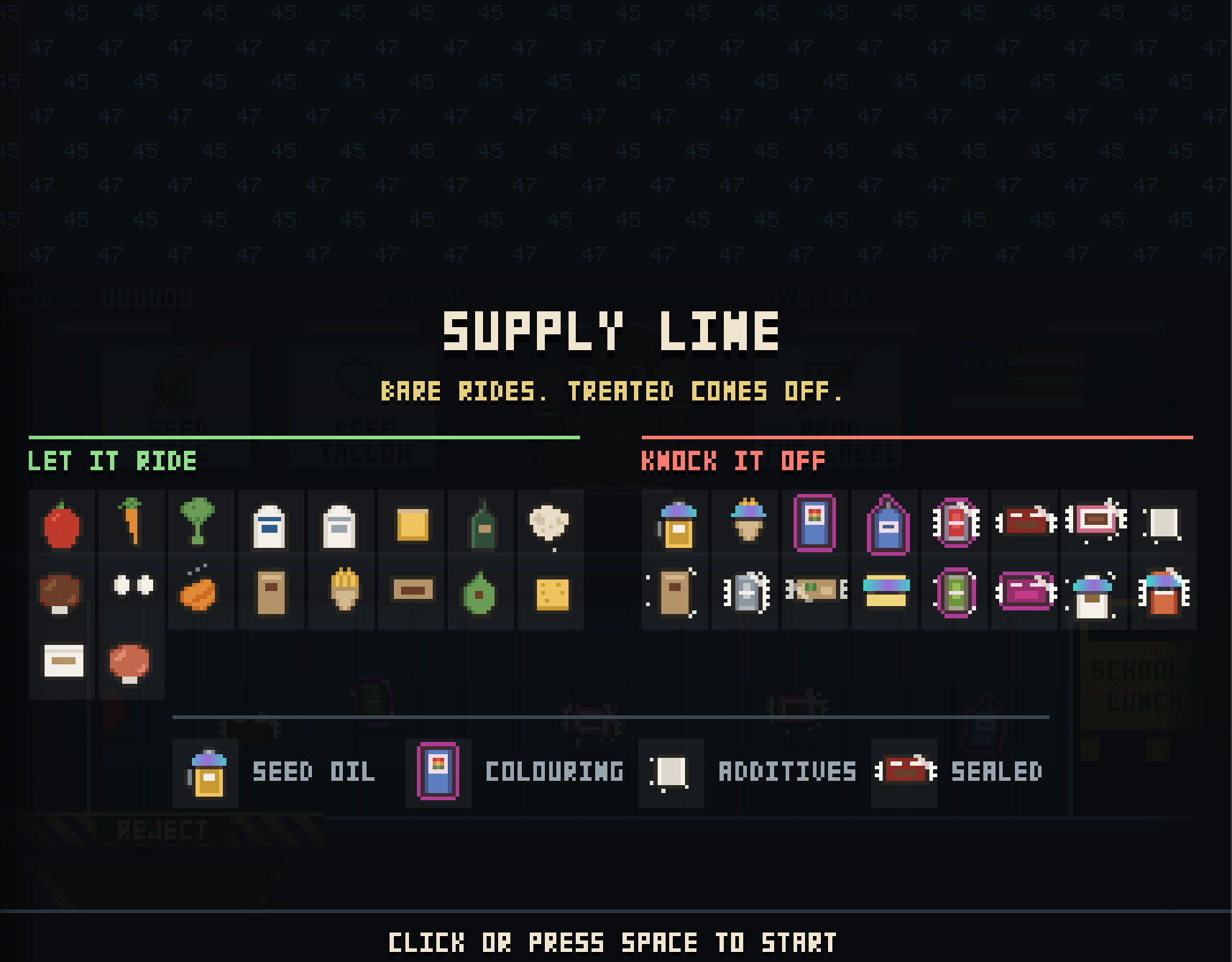
Seed oil, coloring, additives, and "sealed" are considered bad things. There's no explanation for why these things are bad, which is especially troubling for "sealed" status. A lot of food comes sealed for consumer protection. While some of the bad category icons have an outline, foods from both categories may have animated particle effects, so it's difficult to tell them apart.
The factory setting includes 3 posters that also don't provide much information. There's an American flag on the wall, and a black boxer that reminds me of the Mike Tyson Punch-Out game from the 80s. This person is centered on the screen, and whenever you fail to reject a bad food, the boxer punches and cracks your screen, but they're also visibly hurt by the punch, too.
There's a bar at the top of the user interface titled "school' that fills up as more good food gets through, but filling up the bar doesn't stop the conveyor belt or offer any benefit to the player. The conveyor belt gets faster as you go along, increasing the pressure. Miss 5 bad foods and it's game over.
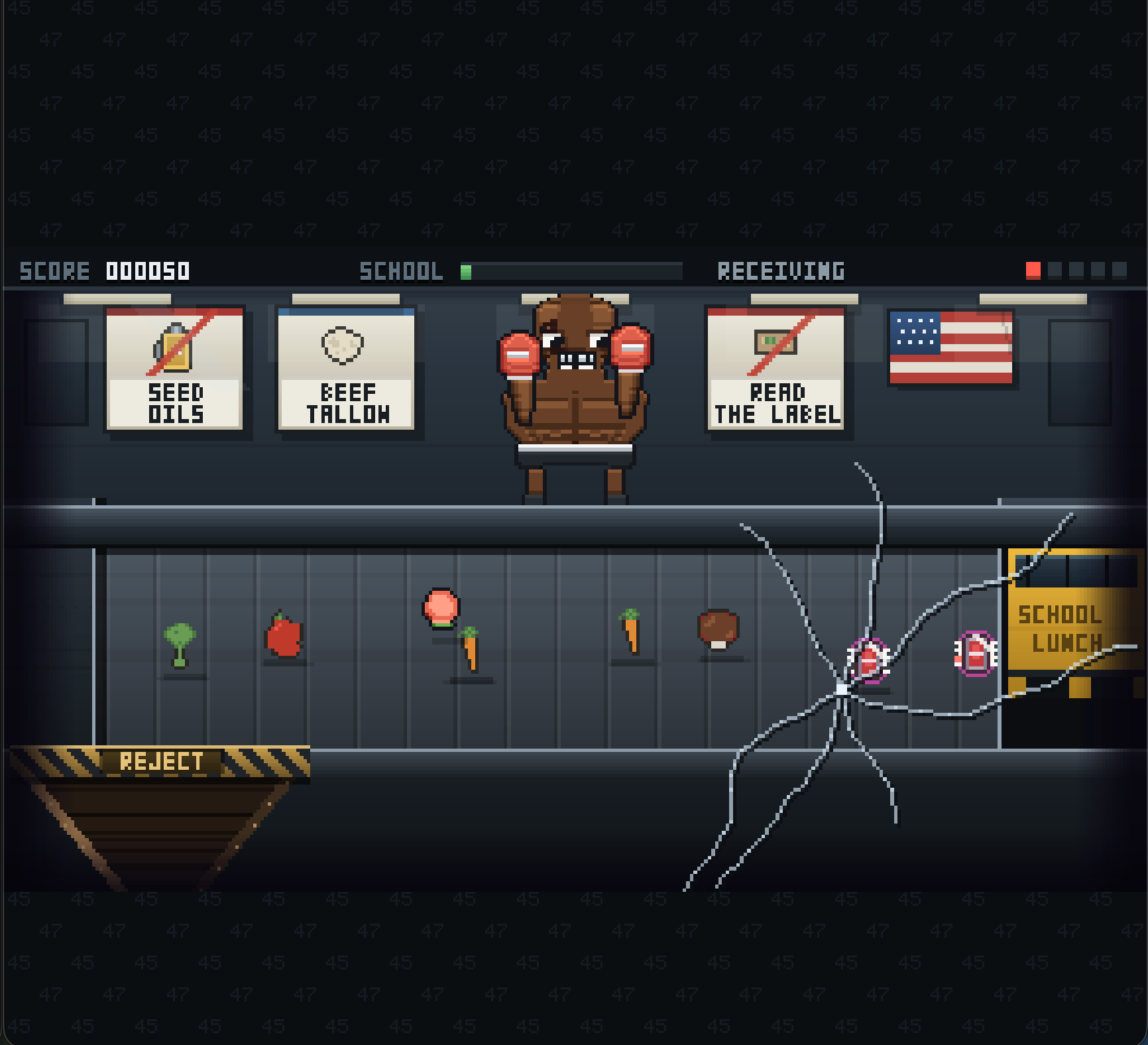
Without a clear win condition, the game is designed to reward players who clear food from the conveyor belt indefinitely with no end. The core mechanics do nothing to teach players about healthy food habits and instead impart the lesson that eating well is all or nothing and mistakes are met with violence (just based on what's going on in this game). There's no way for players to reflect either, by setting goals or making plans, which is what actually creates behavior change.
Rio Run
Another clone, this time of popular game Snake, and the most controversial of The Arcade batch. This one takes place on a sandy checkerboard grid with yellow and black barricade tape bordering the play area. The instructions read: "Patrol the line along the river. Pick up every crosser in the lot. Never double back over the line."
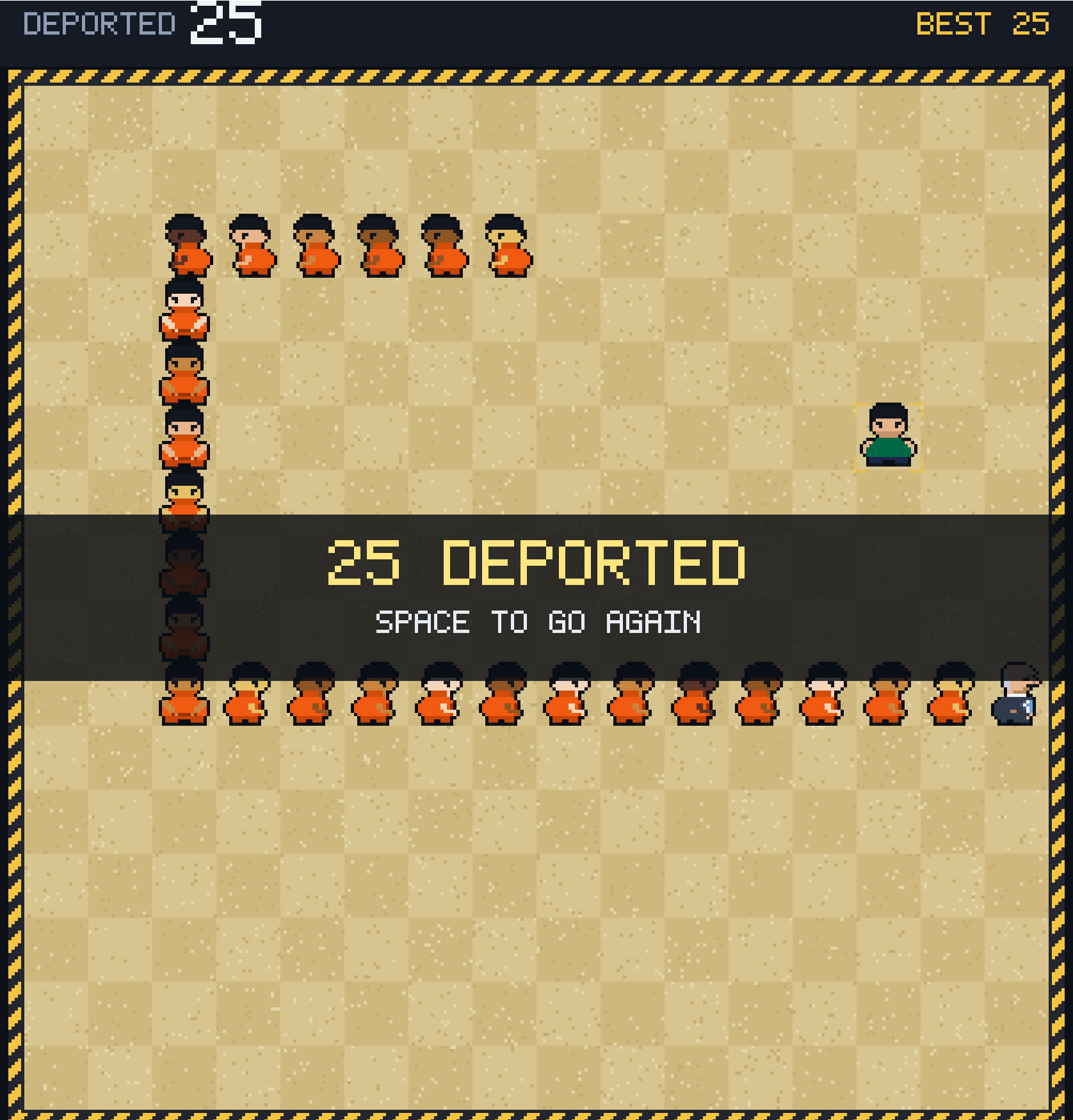
Players control a small, angry-looking white mustachioed man in a blue suit and tie. Using the left, right, up, and down keys, players drive the player character towards little men that pop up around the screen. Each man has the same black hair and a sleeveless shirt.
As players collect the men of varying skin color, they appear behind the white mustachioed man, each one now wearing orange jumpsuits with hands cuffed, creating a line of people that follows the player character around the screen. There's a counter labeled "Deported" that increases as players continue to pick up the men without running into any following behind. Crash into the line and the screen says the total deported.
As a whole, this game doesn't say much about immigration, deportations, or why this administration thinks it's necessary at the scale they've adopted. The main mechanic – collecting people just standing around– turns these men into prisoners with no explanation provided.
What would a good game about immigration even look like?
In 2013, Lucas Pope developed and independently published a game called Papers, Please about being a border inspector in a fictional country. Players take on the role of an immigration inspector at a border checkpoint and must review, inspect, and pass judgement on the documents of travelers using a set of constantly changing rules imposed by the government. This could include an interrogation, arrest, or even a body scan.
I could write an entire stand-alone article just on Papers, Please – it became one of the most important pieces in game art history. It's widely regarded as one of the most successful serious games, using mechanics that promote empathy and immersion in a morally gray situation between doing your job correctly and being humane.
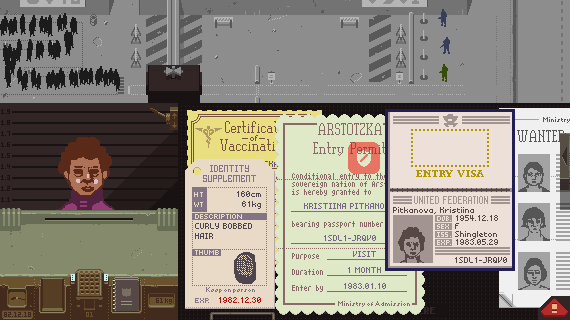
Rio Run and Papers, Please have very little in common. One turns people into points for fun and the other makes you feel the weight of your actions through the gameplay. Games are a powerful medium, but if you neglect to consider the mechanics, there's not much to impart on the player. We learn from what games have us do, not from telling people what to think through titles, settings, art elements, and instructions. These are things that make up a game, but for a serious game, with a purpose other than entertainment, it has to go further.
Designing play at work
Some people shudder at the idea of playing at work. When we think about serious games at work, it's often slapped onto things like training, retros, brainstorming, or team-building. These Arcade games also miss the point entirely – games are about what people are doing, and what comes from it. Applying games at work means thinking deeply about how to connect outcomes to mechanics.
To come up with playful methods or games that meet your needs and fit your team, start here:
Find the purpose
- What do I want people to practice, achieve, or feel?
- Why do I want to create a game for this?
Choose mechanics carefully
- What will players do and how does that match my purpose?
- What does the game reward? If there are points, what do they mean?
- Will anyone feel left out, unable to play, or put on the spot? Is it for a reason?
Pull from your experience
- What games did I play in my childhood or recently that taught me about this skill/outcome/theme?
- What comes easy to me – coming up with situations, questions, stories, challenges, spreadsheets, etc? How can I use that?
- What playful facilitation methods do I already know that I can tweak?
- What has the team already been doing that is close to play, like hackathons, using cards for point estimation, or sharing memes? What similar elements can I apply?
Make it personal
- What do I know about my team and how they like to interact?
- How can I create this with the team instead of for them?
- Who can I reach out to for help designing? (I'm here as an option!)
Reflect
- How will we know it worked?
- What can I add to further reflection or ensure the outcome is carried forward?
The good with the bad
The Arcade was likely meant to be shared and go viral, and not much more than that. But bad games can be great teachers. This collection shows how much every part of a game matters – in its mechanics, message, and intended outcomes. Play is more than some elements, themes, and points thrown together. It's about how we play and the things we take away.
Save your progress?
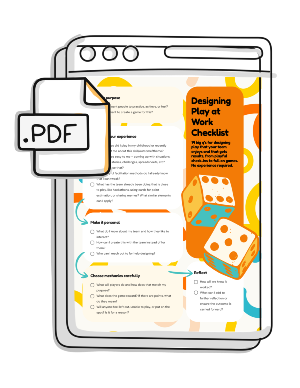
Subscribe to Play at Work to download these 14 questions as a printable checklist. After that, one email a week on play at work: resources, research breakdowns, and guides to bring play to work.
Subscribing is fuh-ree. Unsub any time. Already subscribed? Sign-in below to get the file.